
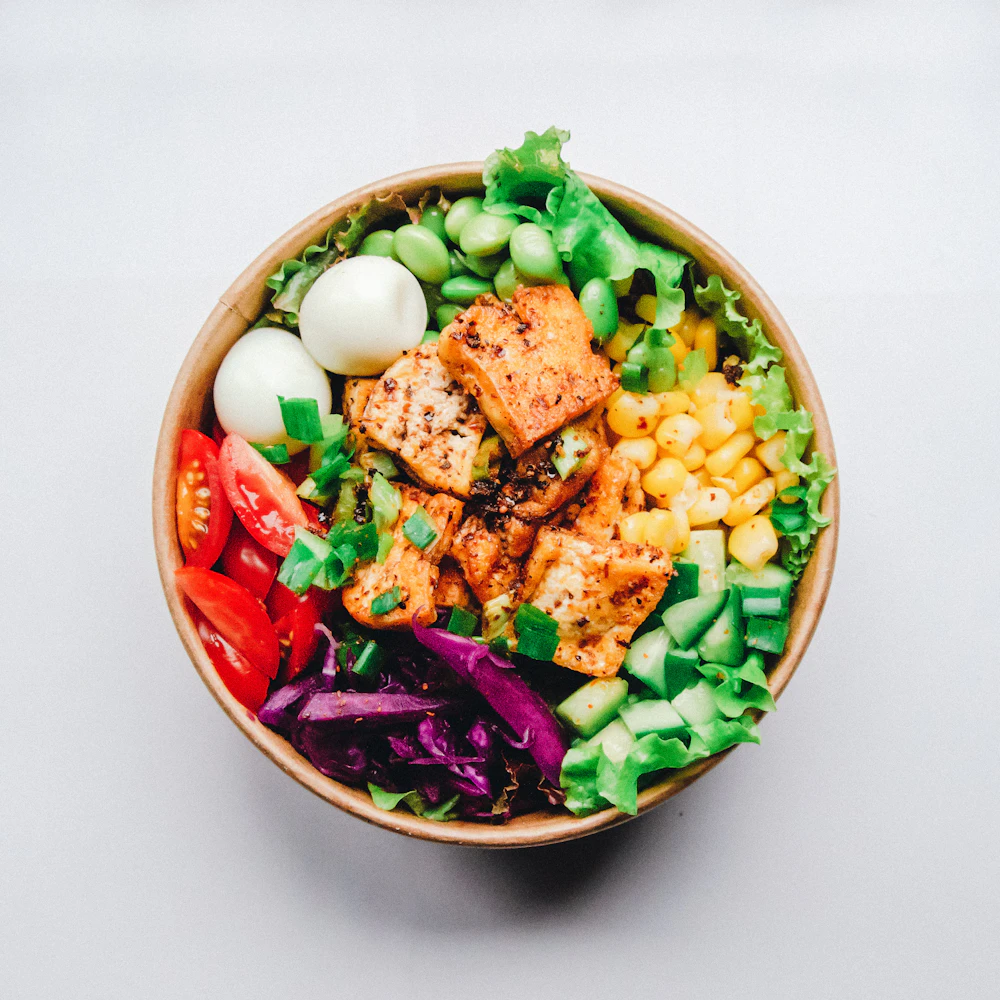
GLP-1s kill your appetite so effectively that the foods you'd normally turn to for protein — chicken, steak, fish — become the first things that sound completely unappealing. They're heavy. They smell strong. They require actual effort to eat.
So women end up grazing on crackers, fruit, small bites of whatever's around. The scale goes down. But so does muscle mass. And those two things are not the same.
How much protein do you need
The guideline for women on GLP-1s is 0.7–1g of protein per pound of lean body mass per day. For most women, that lands somewhere between 80g and 130g daily depending on body composition and activity level.
If that sounds like a lot compared to what you're eating now, it probably is. Most women eating without tracking consume around 40–70g of protein per day. That gap is where muscle loss happens quietly, over months.
Most women on GLP-1s are eating 40 to 70 grams of protein a day. The target for muscle preservation is closer to 80 to 130 grams.
Why hitting protein is so hard on a GLP-1
Three things work against you at once. Total food intake drops significantly — often to 800–1,200 calories per day in the early months. Protein-dense foods are among the hardest to eat when appetite is low. And your hunger cues are unreliable — eating protein has to become deliberate, not something you crave your way into.
Best protein sources when you're barely hungry
The goal is high protein per bite, low volume, and easy to eat. Cold foods tend to win here — less aroma, easier to get down.
A simple daily protein schedule
Spread protein across the day rather than trying to get it all in one or two meals. Small amounts at every eating window is how you hit 100g+ when portions are tiny.
None of those portions are large. None require cooking a real meal. Most are cold or take five minutes. That's the point. On a GLP-1, the goal isn't a protein feast. It's consistent small wins, spread across the day.
The protein-first rule
Whatever you eat, eat the protein part first. Every time, no exceptions. On a GLP-1, you fill up fast. If you eat the crackers and the cucumber first, you'll be done before you get to the cottage cheese. If you eat the cottage cheese first, you've got the protein in you regardless of what else you manage.
This is the single most impactful habit change for women on GLP-1s. It doesn't require eating more. It just requires eating in a different order.
What about protein shakes?
Use them. They're not a lesser option — they're a practical tool for days when eating is genuinely hard. Look for 20–30g of protein per serving, low sugar, and minimal additives. Whey isolate, casein, and plant-based blends all work well. Drink them cold — warm shakes smell stronger and are harder to get down on a nauseated stomach. Fifteen grams sipped over 45 minutes beats not drinking it at all, by a significant margin.
Members get a personalized protein target based on their body weight, a complete food list ranked for GLP-1 tolerability, and Dr. Kanev's meal timing guide built around low-appetite days.
See what's included →Continue to Part 4: Month One — What to Evaluate Before Month Two →